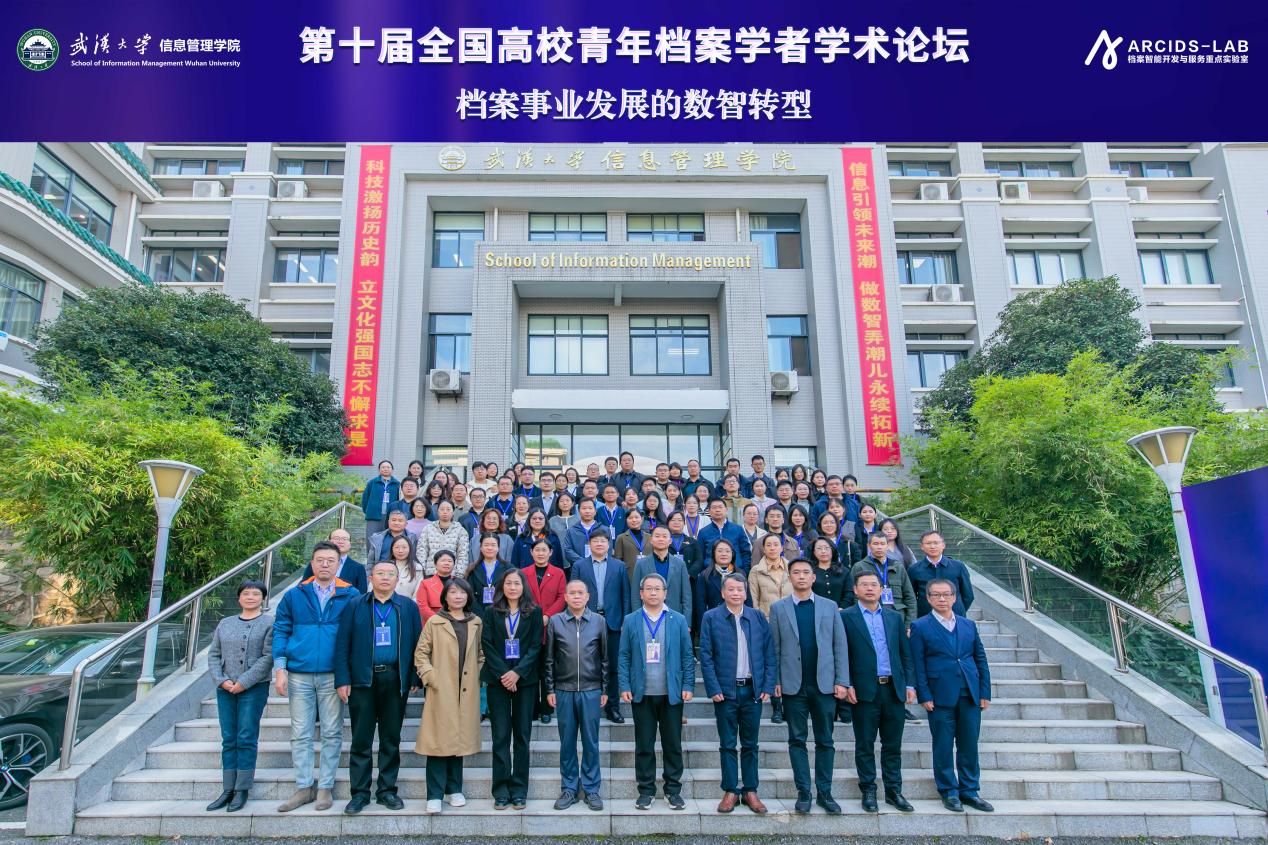
(Correspondents: Siming Xiao, Mengyao Li, Jingjing Wang) From November 30 to December 1, 2024, the 10th "National Academic Forum for Young Archival Scholars in Universities" was successfully held at Wuhan University. The conference was hosted by the School of Information Management, Wuhan University, organized by the National Archives Administration Key Laboratory of Intelligent Development and Service of Archives, and co-organized by the Government Affairs Management Research Center of Wuhan University and the Wuhan University (Wuhan) Institute of Data Intelligence. More than 100 young archival scholars, experts and industry representatives from universities across China gathered to hold in-depth discussions and exchanges on the theme "Digital and Intelligent Transformation in the Development of Archival Work".
The opening ceremony was presided over by Ping Wang, Head of the Department of Archives and Government Information, Wuhan University. Falin Zhang, Deputy Dean of the Institute of Humanities and Social Sciences, Wuhan University, and Yaolin Jiang, Deputy Party Secretary of the School of Information Management, Wuhan University, delivered speeches. On behalf of Wuhan University, Falin Zhang extended a warm welcome and sincere thanks to all guests, experts and young archival scholars. He emphasized that the digital and intelligent era has brought unprecedented opportunities and challenges to archival work, and that Wuhan University has long been committed to exploring new directions in scientific research, new models of talent cultivation and new forms of social service in the digital and intelligent environment, actively promoting interdisciplinary integration in the humanities and social sciences, which will provide strong support for the digital and intelligent transformation of archival work.
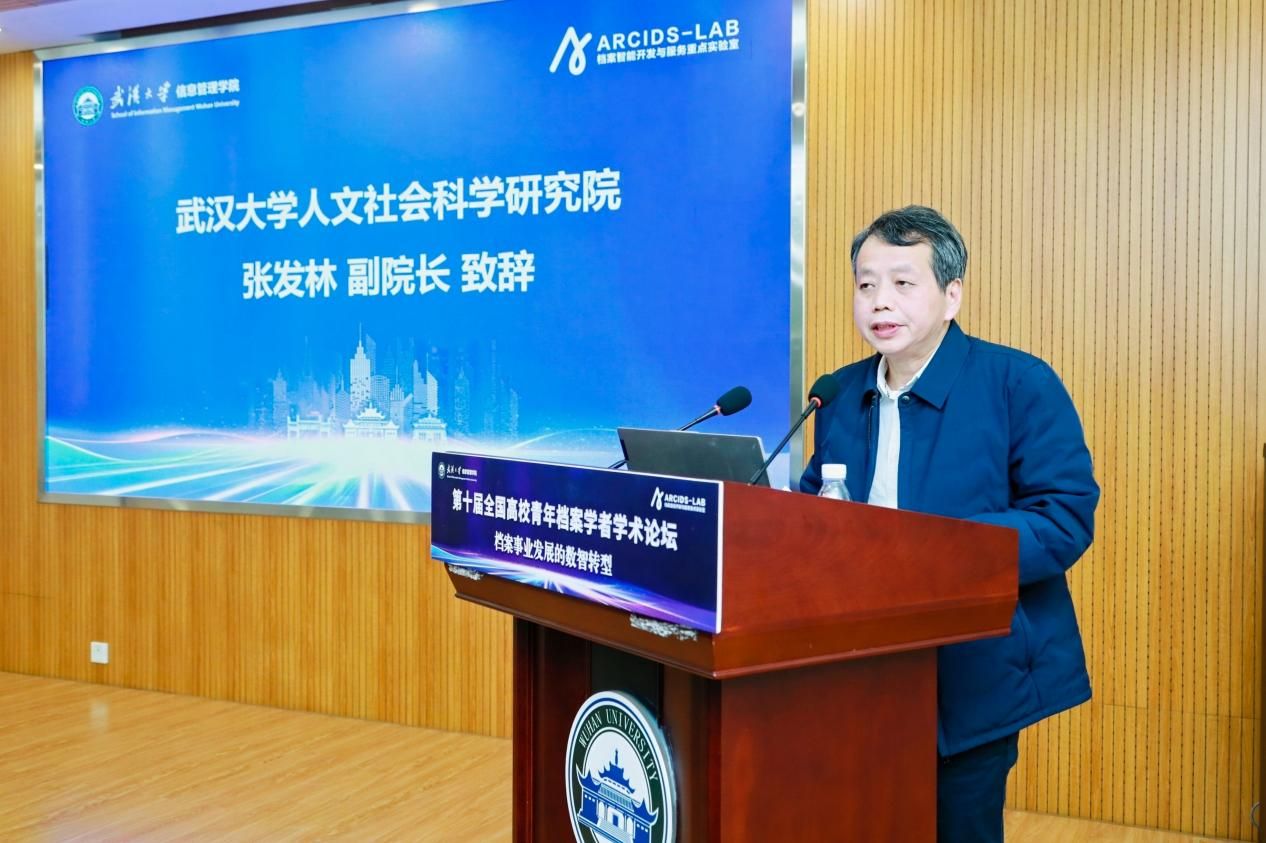
Yaolin Jiang warmly welcomed the experts and young scholars attending the forum and reviewed with participants the achievements of the School of Information Management, Wuhan University, in developing the discipline of archival science. He noted that digital and intelligent transformation has become the only path to high-quality and sustainable development of archival work. Young scholars should not only devote themselves to academic research and jointly explore theoretical frameworks and methodological systems for the digital and intelligent transformation of archives, but also actively engage in industry practice to address the real-world challenges facing archival work in the digital and intelligent era, and, above all, serve as a bridge to cultivate more outstanding archival professionals who meet the needs of the digital and intelligent era.
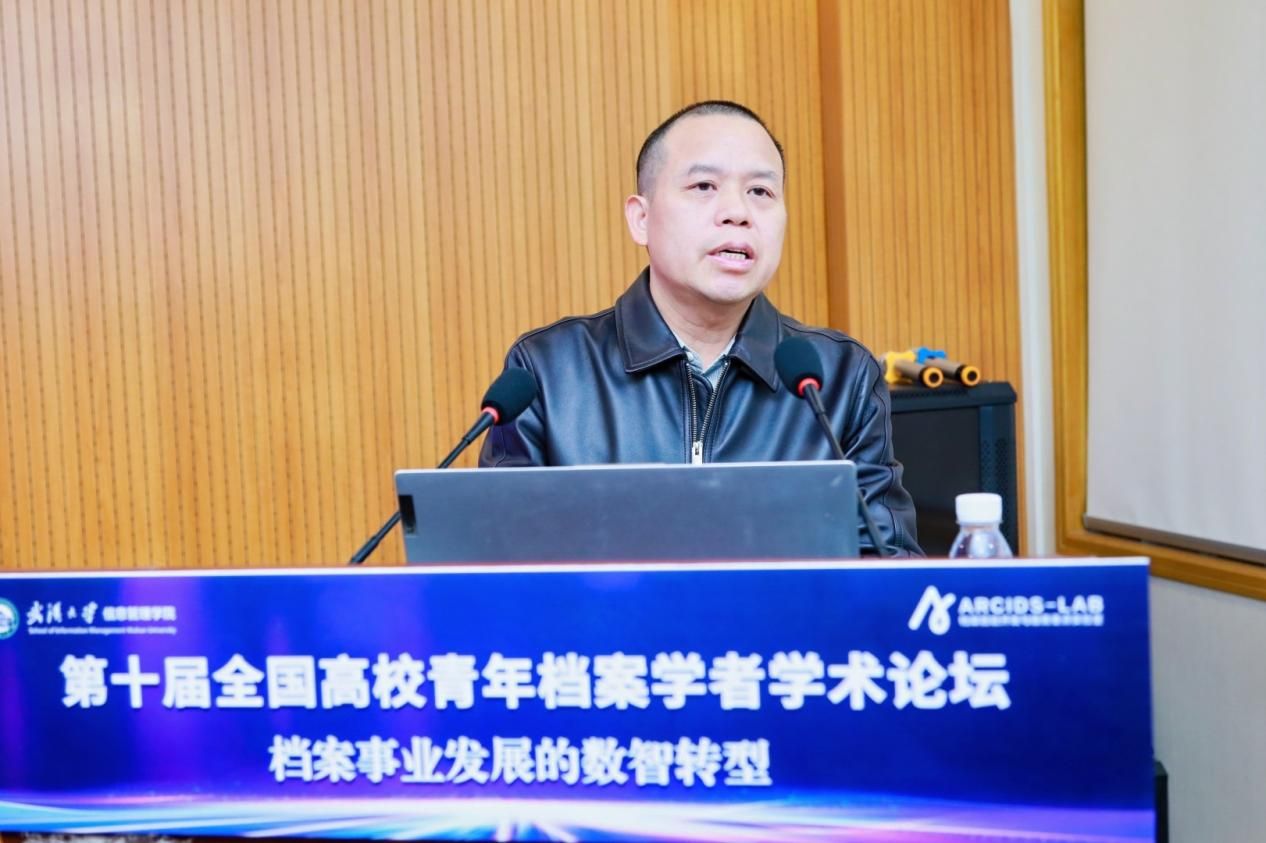
Following the opening ceremony, the participating experts and scholars took part in an interdisciplinary forum to pool their wisdom and jointly explore new frontiers in archival science.
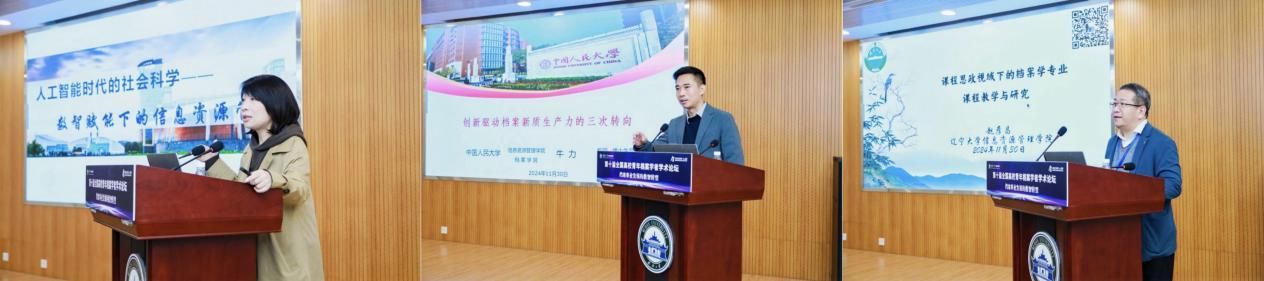
Cui Huang, Head of the Department of Information Resources Management, School of Public Affairs, Zhejiang University, delivered a report titled "Information Resources Management Empowered by Digital Intelligence", pointing out how the research methods and research objects of the information resources management discipline have been expanded and innovated in the digital and intelligent era, and offering an analysis based on practical scenarios.
Li Niu, Deputy Dean of the School of Information Resource Management, Renmin University of China, delivered a report titled "Three Shifts in New Quality Productive Forces of Archives Driven by Innovation". Starting from the real "gap" between national high-quality development and archival work, he proposed three shifts in innovation-driven new quality productive forces of archives.
Yanchang Zhao, Dean of the School of Information Resources Management and Head of the Department of Archival Science, delivered a report titled "Teaching and Research of Archival Science Courses from the Perspective of Curriculum-Based Ideological and Political Education", sharing the fruitful teaching and research achievements of the archival science program at Liaoning University in curriculum-based ideological and political education.
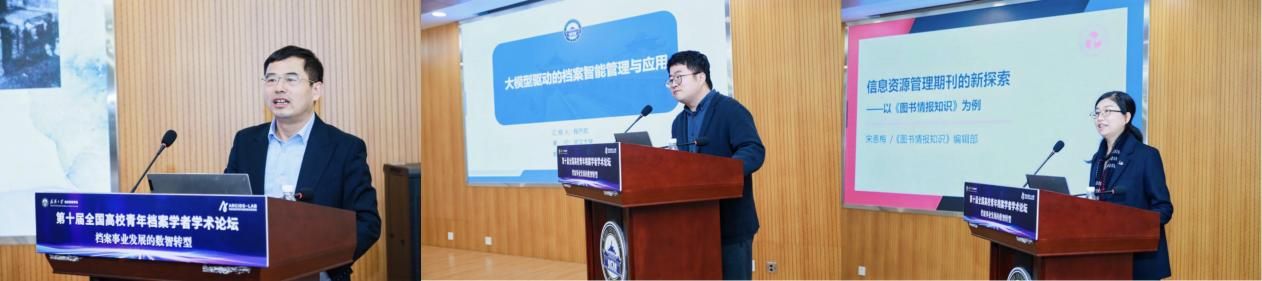
Linxing Zhou, Head of the Department of Archival Science, School of Cultural Heritage and Information Management, Shanghai University, delivered a report titled "A Funnel Model for Archival Appraisal: A Value Cognition Method Based on Social Relations". Building on a correction of the erroneous view underlying the appraisal approach in which "a single social relation determines whether a record survives", he proposed a funnel model for archival appraisal from the perspective of N-ary social relations and explained its mechanism.
Qikai Cheng, Associate Professor at the School of Information Management, Wuhan University, delivered a report titled "Large Model-Driven Intelligent Archival Management and Applications", introducing how large models empower the management and development of smart archives from three aspects: archival layout understanding, archival data understanding and intelligent archival applications.
Enmei Song, Director of the Journal Center of the School of Information Management, Wuhan University, delivered a report titled "New Explorations of Information Resources Management Journals: Taking 'Documentation, Information & Knowledge' as an Example", introducing the exploration and development of the journal "Documentation, Information & Knowledge" in terms of its basic profile, representative papers and featured special topics, and its signature brand activities.
To promote broader and deeper discussion, the conference set up four parallel sub-forums for young scholars to exchange ideas, each focusing on different hot topics and frontier issues in archival science. The themes were as follows:
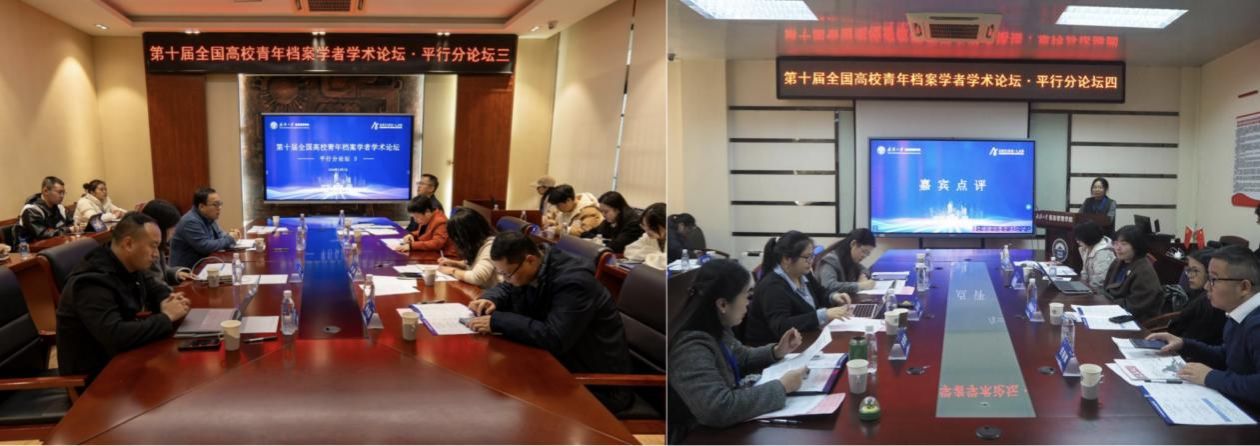
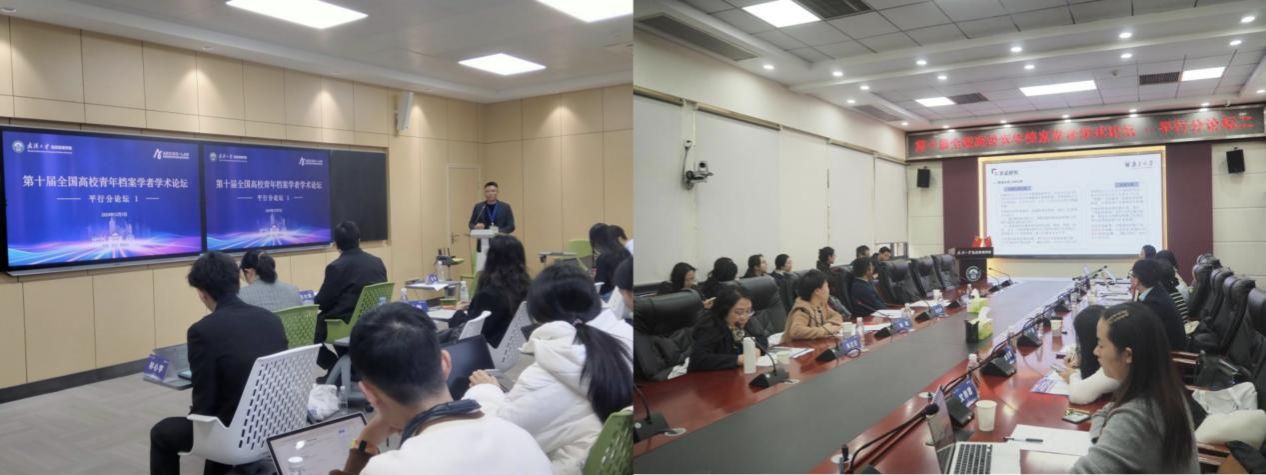
Parallel Sub-Forum 1: Wisdom and Inspiration, Exploring New Frontiers in Archives. Participating young scholars discussed key topics such as the construction of Chinese archival discourse, archival data governance, narrative-based development of archives, the development of archival work and the educational value of documentary heritage, analyzing their current status and existing problems.
Parallel Sub-Forum 2: Innovation and Integration, the Frontier of Archival Intelligence. Participating young scholars shared their latest research findings and innovative perspectives on key topics such as the factorization of archival data as a production factor, AI-empowered archival management and development, personal digital archiving behavior and archival cultural services. They also shared and discussed digital archival resources of state-owned enterprises, the digital transformation of archival culture, and the value and application of archival data.
Parallel Sub-Forum 3: Critical Inquiry, Setting Sail for Archival Intelligence. Participating young scholars presented frontier perspectives and innovative ideas in archival research on topics such as archival responsibility in research integrity building, the evidentiary validity of electronic records, risks in the digital transformation of archival management, and single-track management systems for electronic records in the context of data-driven transformation. They also conducted in-depth discussions and offered recommendations on indicator systems for the classification and grading of sensitive information, archival access review and archival data security governance.
Parallel Sub-Forum 4: Collision of Ideas, Inspiring Archival Thinking. Participating young scholars held in-depth discussions on topics such as certificate issuance from civil affairs archives in the context of digital government, the mutual promotion of new quality productive forces and research data sharing, the construction of integrity records for licensed pharmacists, and electronic records management research based on ethnographic methods, analyzing their current status, mechanisms and pathways. They also shared and engaged in lively discussions on emerging research topics such as the dissemination of documentary heritage from the perspective of "Generation Z", the revitalization of documentary heritage in the context of deep integration of culture and technology, and the governance of archival data assets.
After the forum, the participating scholars visited the National Archives Administration Key Laboratory of Intelligent Development and Service of Archives, the Wuhan University Laboratory for Intelligent Computing of Cultural Heritage and the Wuhan University History Museum, gaining a close-up view of Wuhan University's innovative research achievements in archival science and technology and cultural heritage.
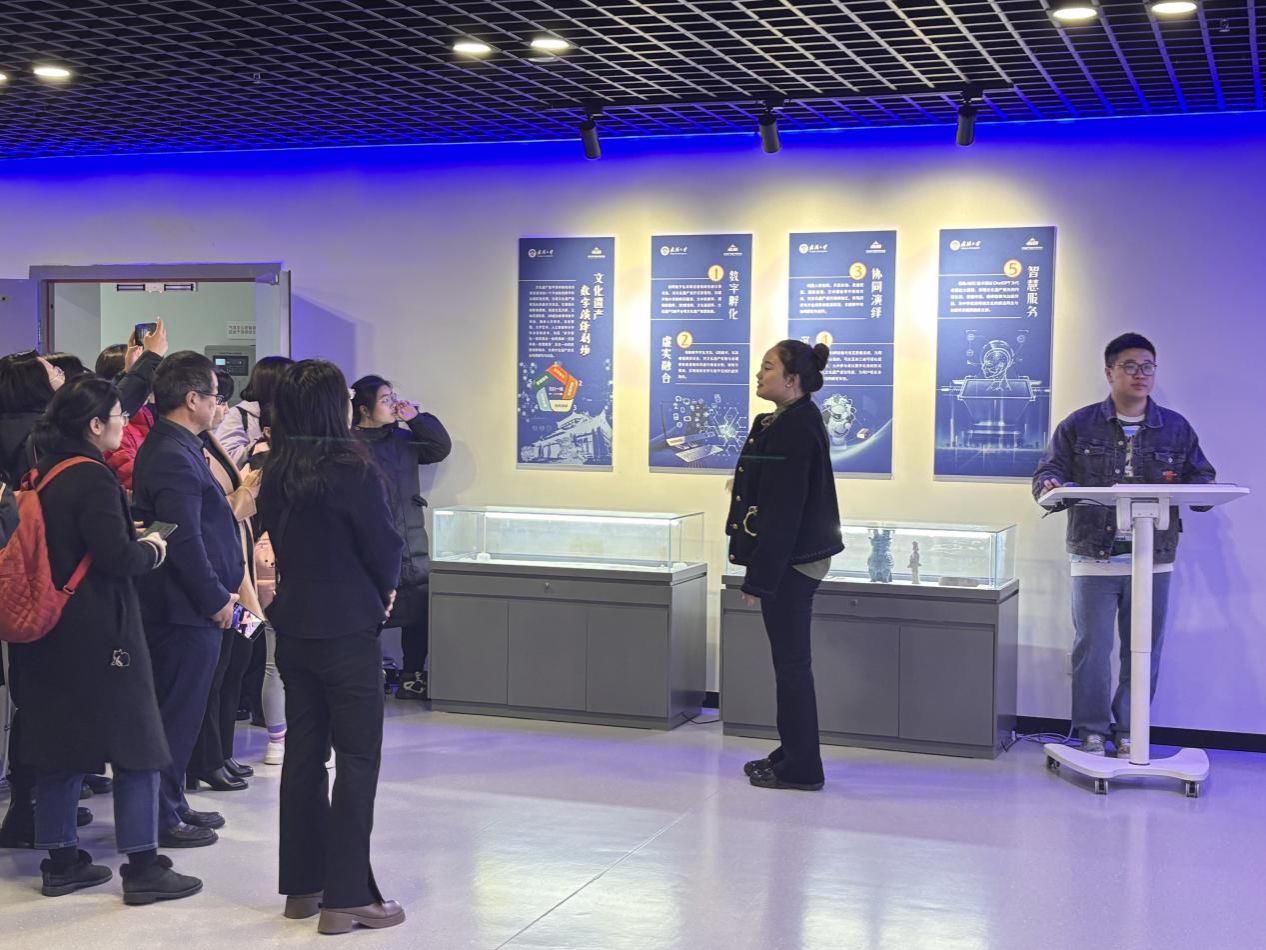
The forum built an open, shared platform for exchange and mutual learning, contributing many valuable ideas and insights to promoting the high-quality development and digital and intelligent transformation of archival work. Taking this opportunity, the young scholars engaged in active exchanges and jointly injected strong momentum into the future development of archival science.
Since its first successful session at Liaoning University in 2014, the National Academic Forum for Young Archival Scholars in Universities has become an important academic exchange event in the archival science community. The forum aims to provide a stage for young archival scholars in universities to showcase research results, exchange academic ideas and jointly plan the development of the discipline.