(Correspondents: Shuning Tang, Yijie Wang, Mengyao Li) Four decades of archival scholarship, forging ahead to write new chapters. On November 30, Wuhan University held a symposium marking the 40th anniversary of the re-establishment of its archival science discipline and on archival science talent cultivation in the digital-intelligent era.
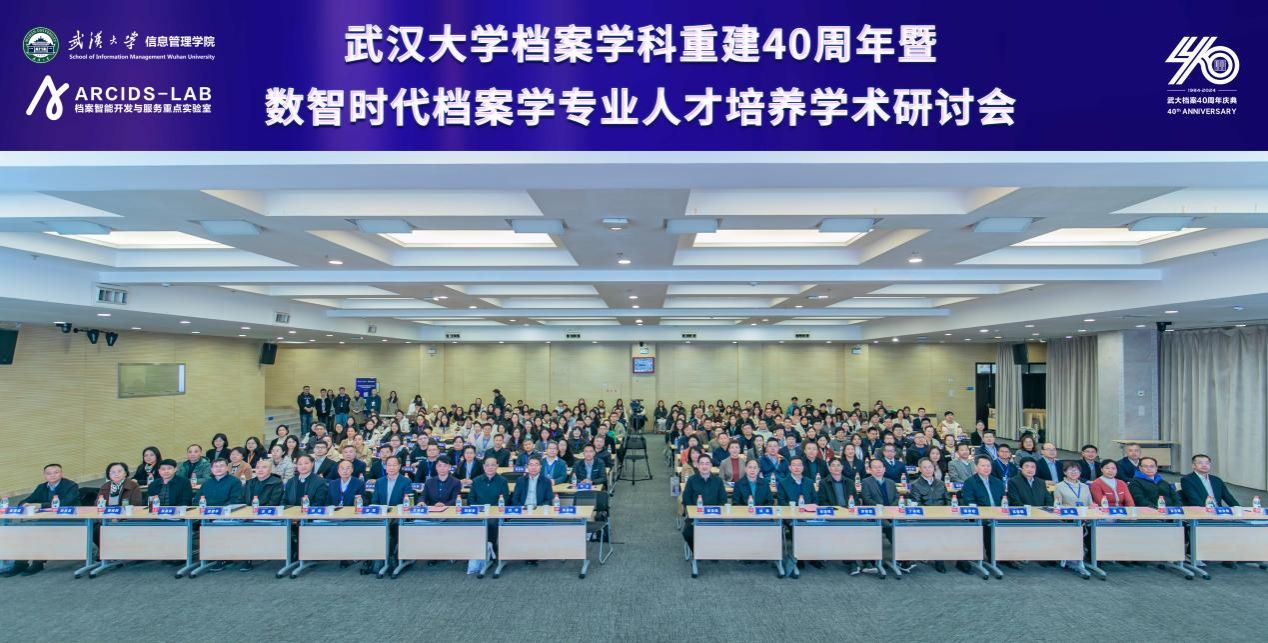
Attendees included Huiling Feng, former Executive Vice President of Renmin University of China and National Distinguished Professor; Hua Fu, former Deputy Director of the National Archives Administration of China and the Central Archives; Xiaochun Liu, Deputy Director of the Hubei Provincial Archives; Longqiang Chu, Deputy Secretary of the CPC Wuhan University Committee; and Bin Zhang, Chair of the Ministry of Education Steering Committee for Archival Science Teaching in Higher Education Institutions and Professor at Renmin University of China. More than 200 experts, scholars and student representatives from archival academia and industry took part in the event.
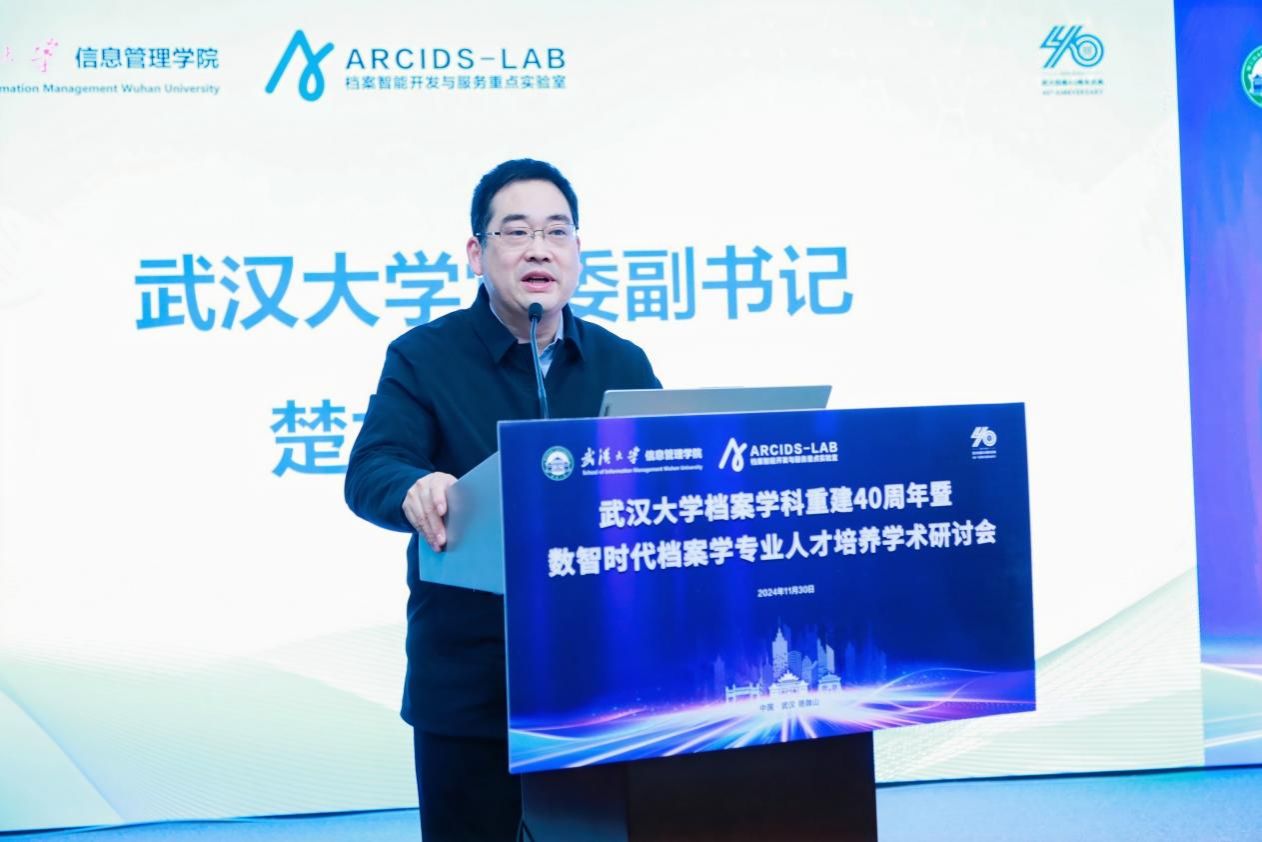
In his address, Longqiang Chu extended a warm welcome to the leaders, experts and scholars attending the symposium and expressed sincere gratitude to colleagues from peer institutions for supporting the development of archival science at Wuhan University. He noted that Wuhan University is committed to building an archival science discipline with distinctive digital-intelligent features and to cultivating versatile, application-oriented senior archival professionals with an international outlook, mastery of digital-intelligent technologies and a spirit of innovation. Looking ahead, Wuhan University will closely align with major national strategic needs and the needs of economic and social development, fulfill its mission of building a leading country in education, further develop its archival science discipline to high starting points and high standards, and solidly promote the discipline as a firm pillar of the university's high-quality development.
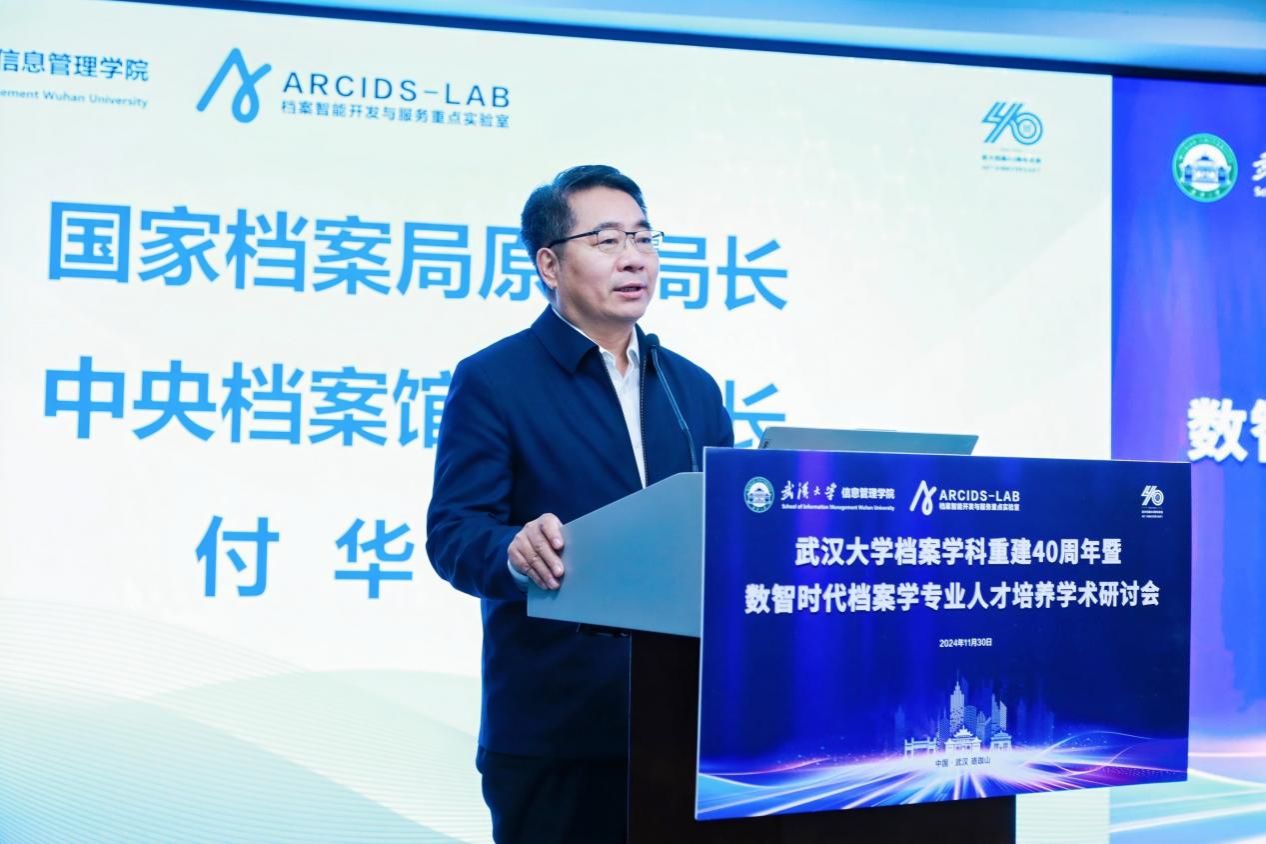
In his address, Hua Fu reviewed the development of China's archival undertakings. He pointed out that over the 40 years since its re-establishment, the archival science discipline at Wuhan University has met the talent needs of China's reform and opening up, built on its own characteristics and strengths, and made important contributions to the development of China's archival undertakings. He called for continuously advancing archival work in the new era by conducting practice-driven scientific research, strengthening archival theoretical innovation for the new era, and cultivating the archival talent the nation needs.
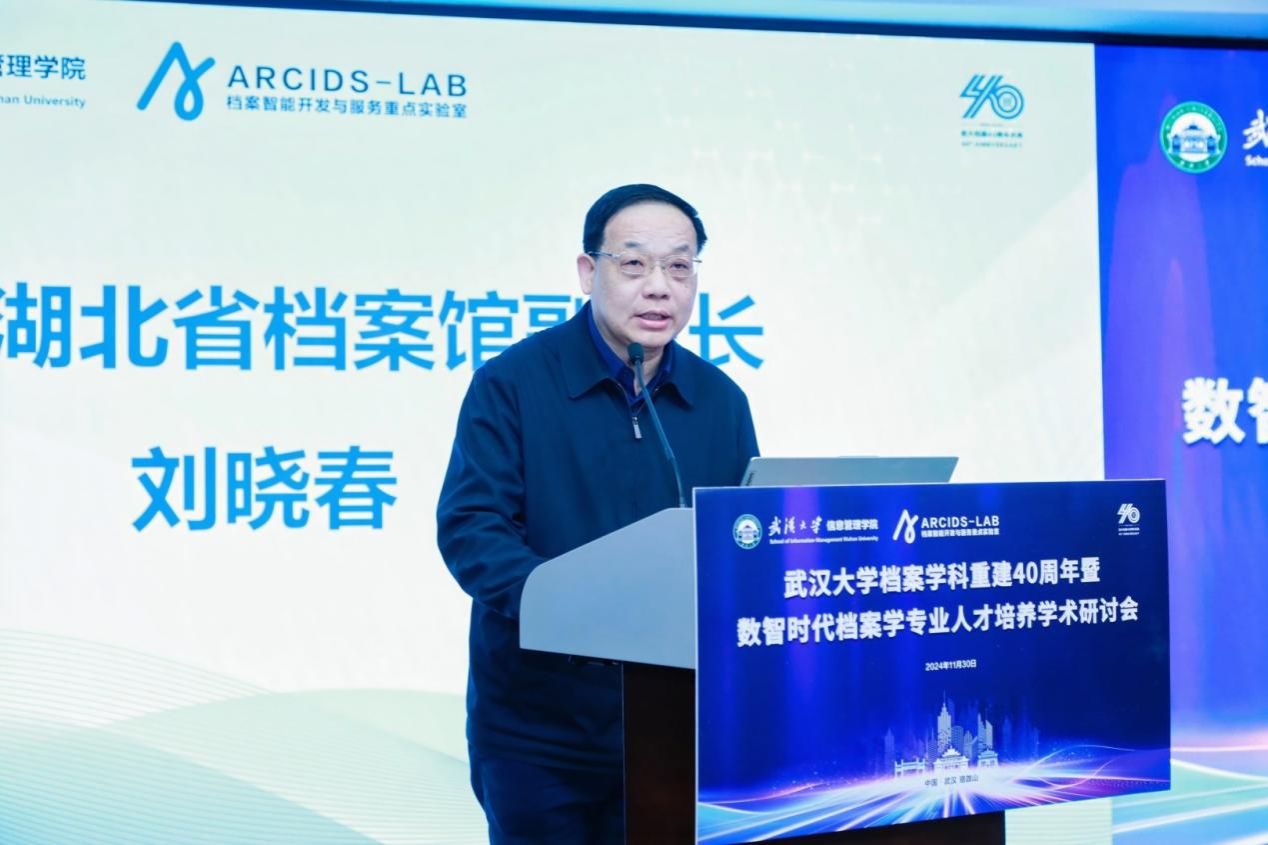
Xiaochun Liu thanked the archival science discipline of Wuhan University for its continuous intellectual support and innovative impetus for the development of archival undertakings in Hubei. He stated that the Hubei Provincial Archives will support the steady development of archival science at Wuhan University in areas such as archives-university cooperation, advanced technology research and development, and talent cultivation. Relying on the jointly established National Archives Administration Key Laboratory of Intelligent Development and Service of Archives, one of the first batch of such key laboratories, the two sides will jointly explore new paths for archives-university collaboration and integrated industry-university-research development.
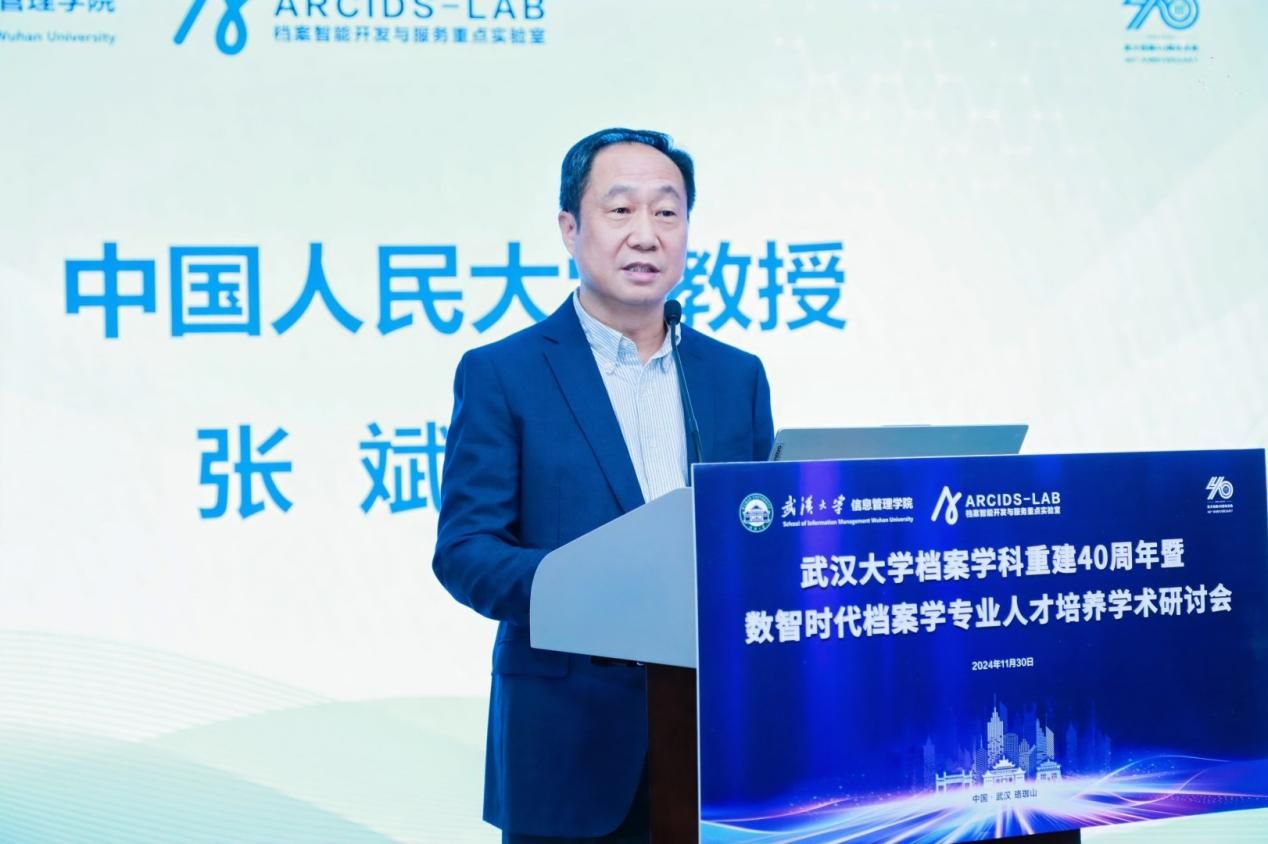
Bin Zhang reviewed the general state of archival higher education since China's reform and opening up and congratulated Wuhan University on the 40th anniversary of the re-establishment of its archival science discipline. He noted that the discipline has written a remarkable chapter in the history of archival education in China and has achieved notable success in archival teaching, theoretical innovation and professional practice. He wished the discipline continued progress and new glories on the new journey of the new era, contributing to building an independent Chinese knowledge system of archival science.
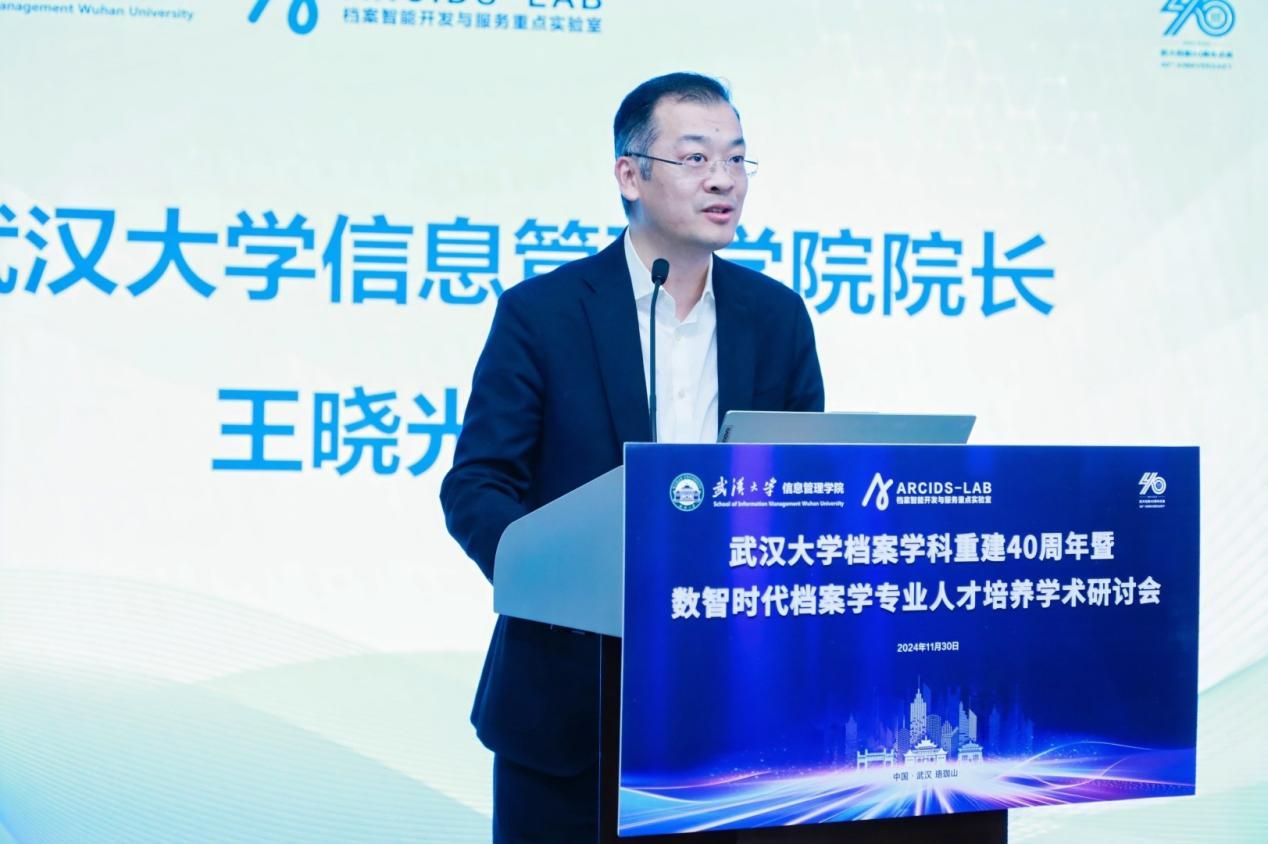
Xiaoguang Wang, Dean of the School of Information Management, thanked academia and industry for their long-standing care and support for archival science at Wuhan University. He stated that the School has actively promoted the digital-intelligent transformation of archival science, formed a teaching team with multidisciplinary backgrounds, maintained dialogue among government, industry, academia and research, strengthened international cooperation, and explored paths for the innovative development of the discipline. The School will continue to advance the forward-looking planning and quality-oriented development of archival science and cultivate more archival professionals with digital-intelligent competence, industry leadership and international competitiveness.
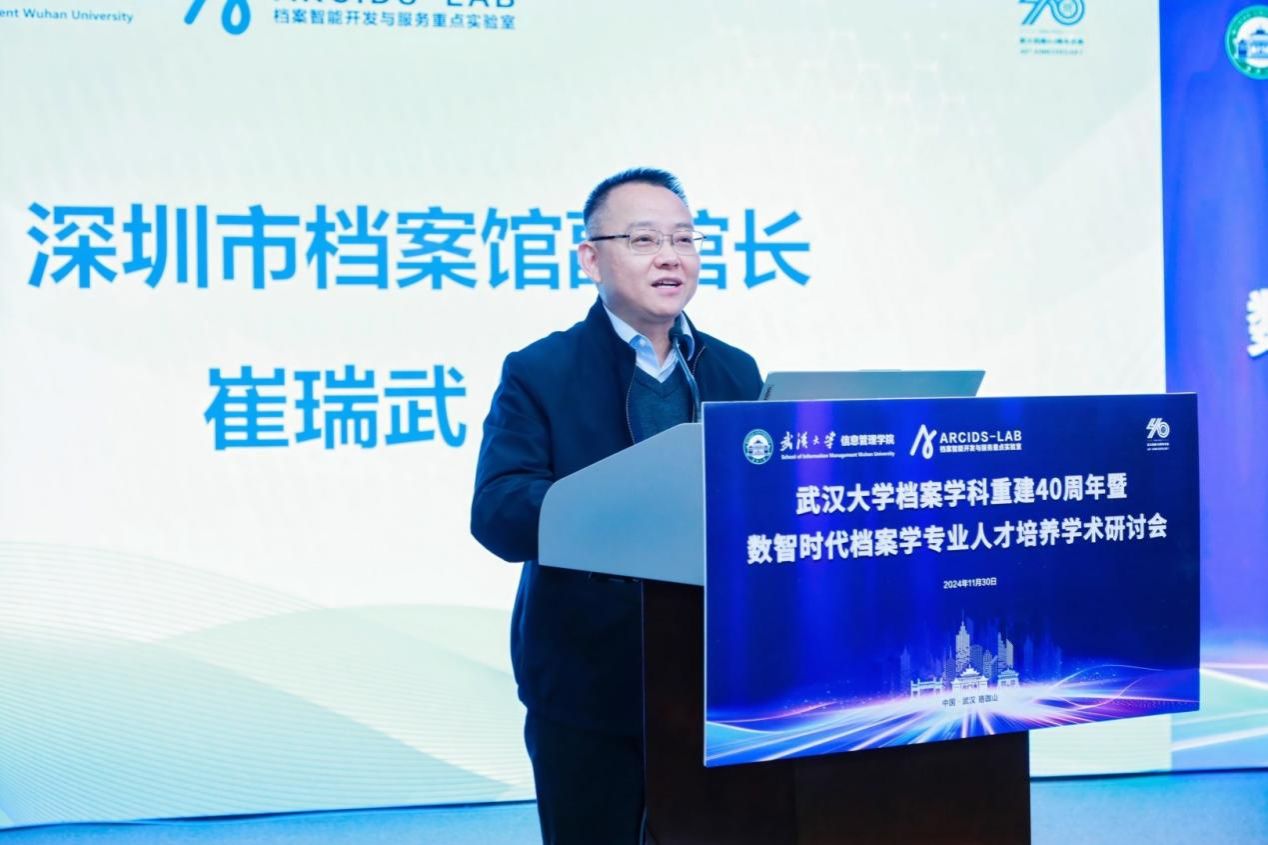
Alumnus Ruiwu Cui, Deputy Director of the Shenzhen Municipal Archives, recalled his four years of study in the archival science program at his alma mater, shared memorable learning experiences and anecdotes from campus life, and expressed his gratitude for the dedicated education he received. He noted that the forward-looking curriculum and practice-oriented teaching model of the archival science discipline fostered his solid grounding in information management and had a profound impact on his career development. He wished the discipline even greater achievements and archival science students success in their studies.
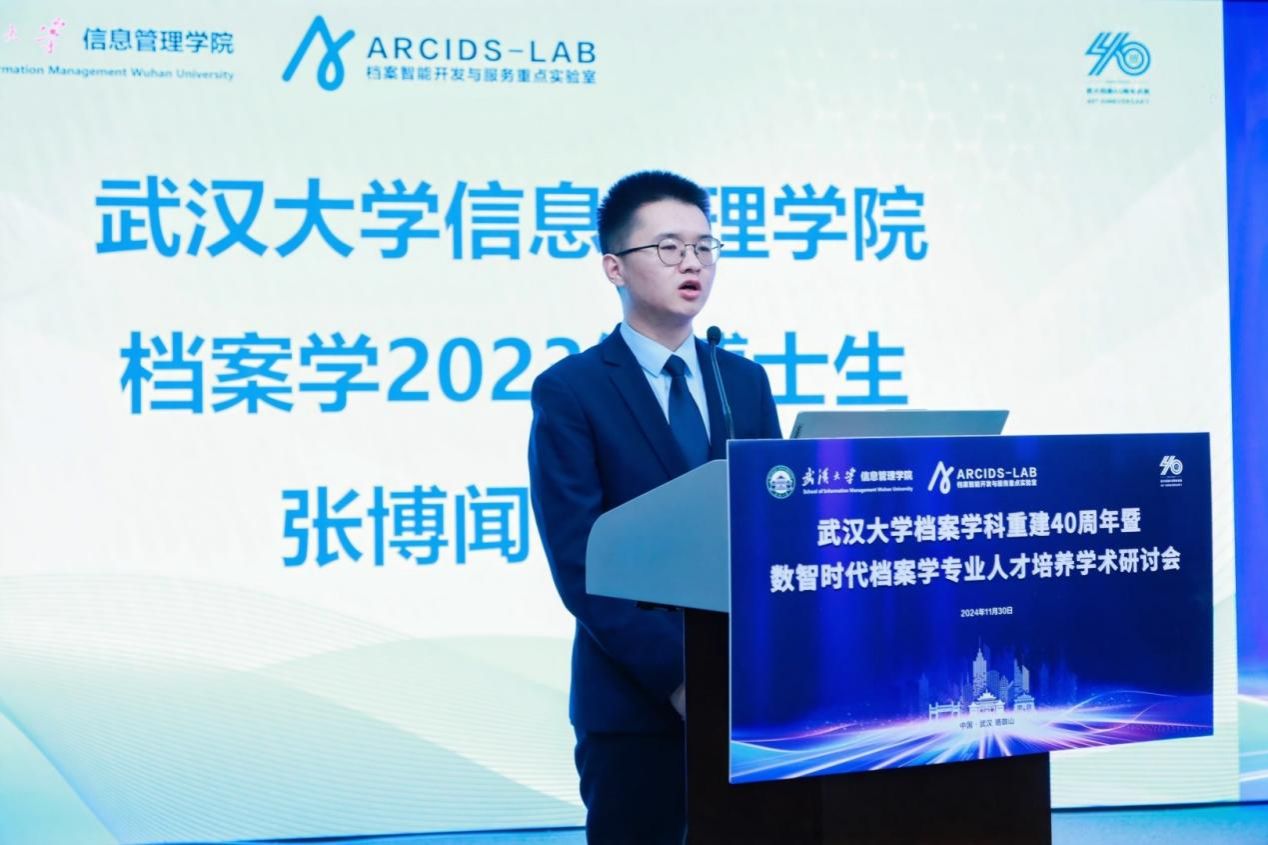
Bowen Zhang, a 2023 doctoral student at the School of Information Management, shared his gains and reflections from studying archival science. He expressed satisfaction with the ample learning resources provided by the discipline, happiness at the dedication of its faculty and their parental care for students, and pride in its educational philosophy and achievements. He stated that, as a student who has studied archival science since his undergraduate years, he will live up to his mission and bring credit to the development of the discipline.
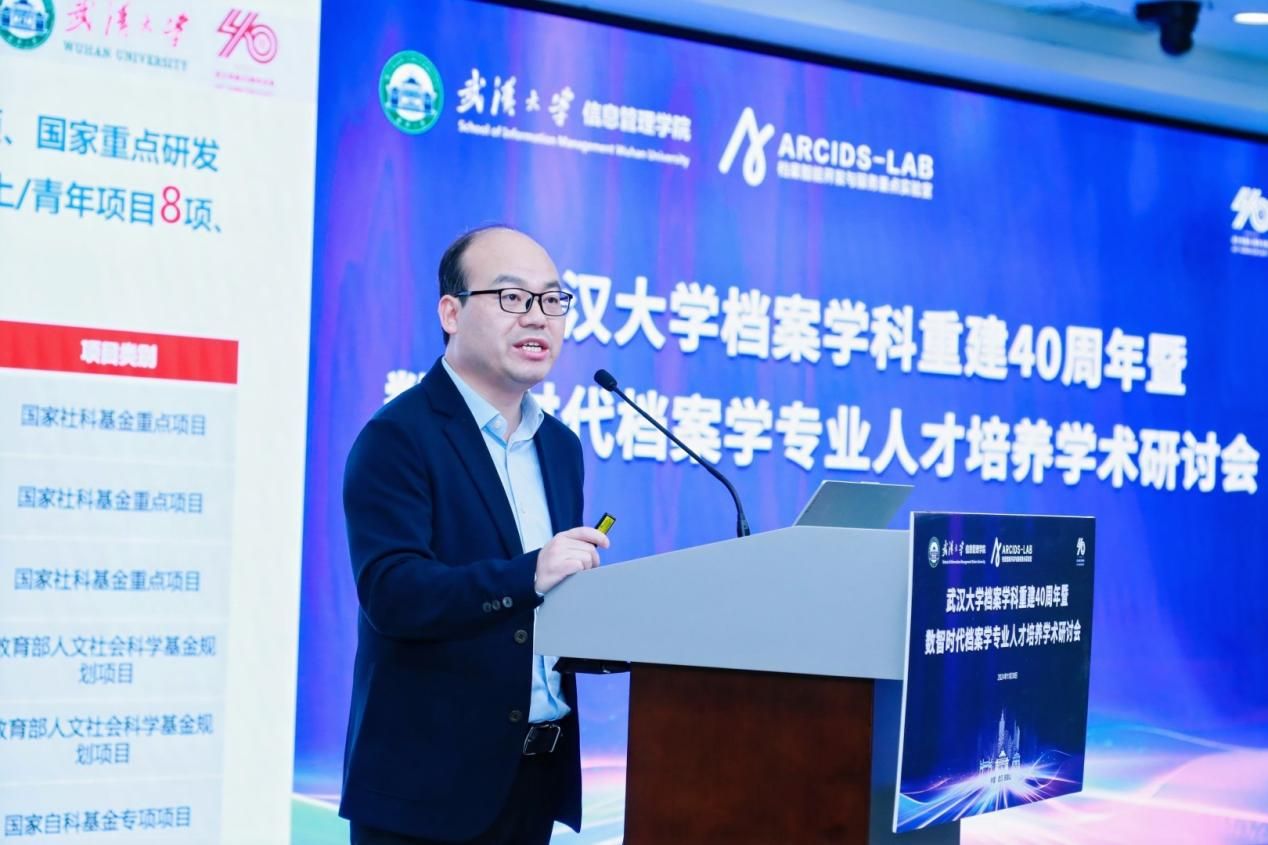
Ping Wang, Head of the Department of Archives and Government Information at the School of Information Management, reported on the development of archival science at Wuhan University. He stated that, standing at a new historical starting point, the discipline will accelerate its application for international CLIP professional accreditation and cultivate digital-intelligent talent with a global vision capable of participating in global governance; intensify talent recruitment and optimize the structure of its faculty; pool research strengths to develop distinctive research features and build a research hub for archival cultural heritage and government big data; and promote the translation and application of archival research outcomes to serve the development of the discipline and the profession.
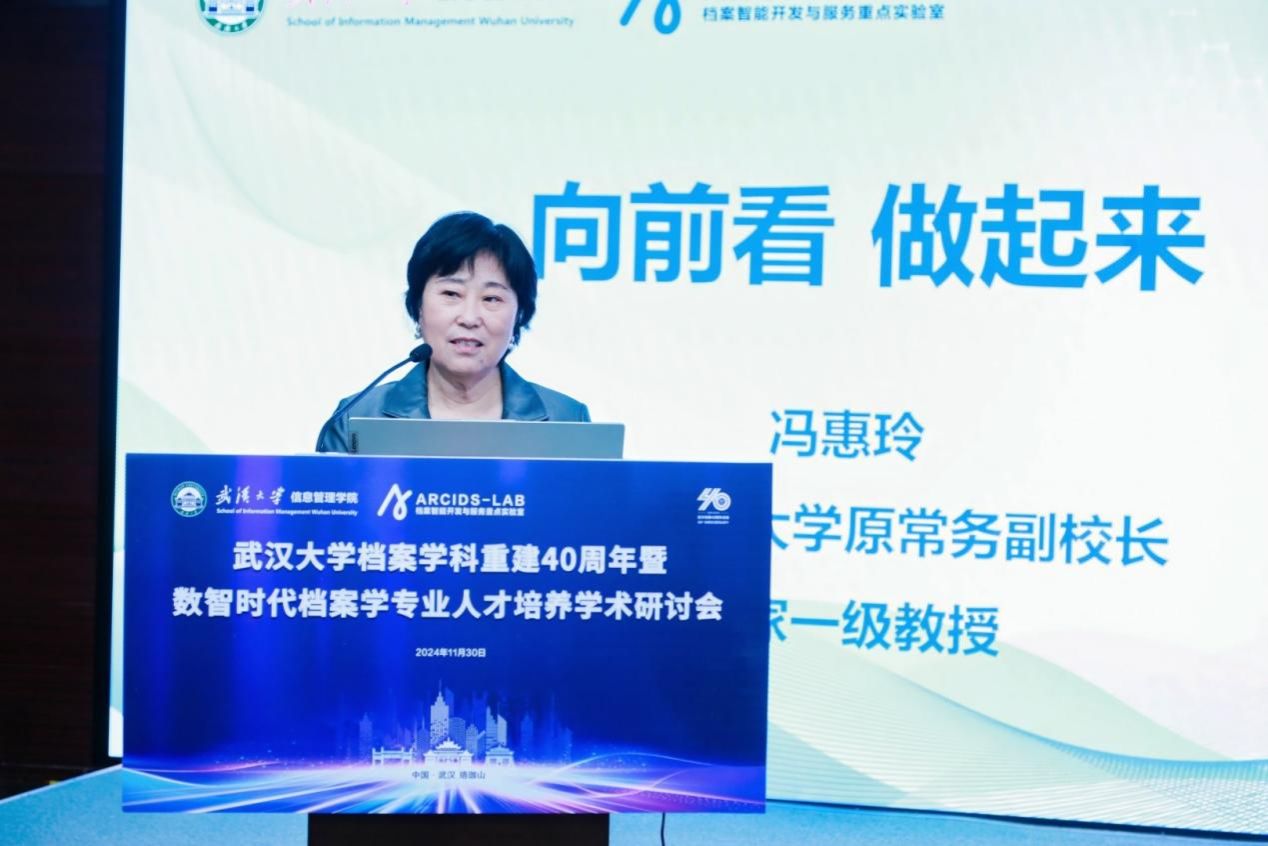
Huiling Feng delivered a keynote report titled "Look Forward and Take Action." She discussed the practical challenges currently facing archival science and strategies for its development. Drawing on her experience of twice shifting the focus of her academic research, she proposed that archival science teachers in the digital-intelligent era should keenly grasp future trends in the discipline and cultivate students' imagination, creativity, understanding and empathy in an environment where humans and machines coexist, while also closely integrating archival research with practice, identifying problems and pursuing true knowledge through practice. She called on colleagues in the archival community to combine thought with action and jointly write a new chapter in the development of archival science in the digital-intelligent era.
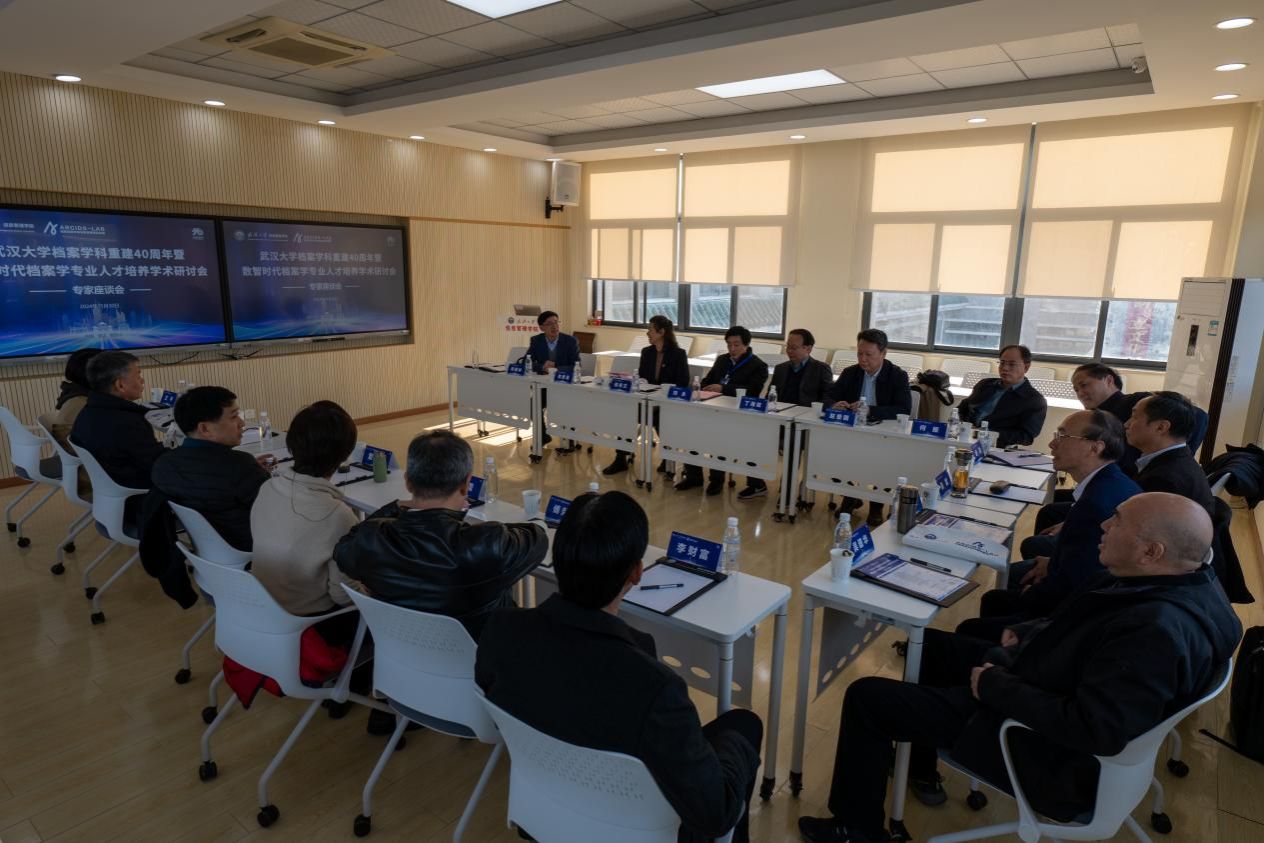
At the seminar on archival science talent cultivation, participating experts and scholars held lively discussions on innovative concepts, frontier issues and hot topics in archival talent cultivation and academic research, further clarifying the approaches, priorities and directions for cultivating archival science professionals in the digital-intelligent era, and pledged to further deepen the integration of industry and education and of science and education to improve the quality of archival science talent cultivation.
During the symposium, the 10th National Forum for Young Archival Scholars of Higher Education Institutions was also held. The forum featured 1 interdisciplinary forum and 4 parallel sub-forums, where archival scholars from Wuhan University and peer universities, more than 50 in total, engaged in in-depth exchanges and discussions on the theme of "Digital-Intelligent Transformation of Archival Undertakings," offering ideas and insights for the digital-intelligent transformation and sustainable development of archival undertakings.
According to the introduction, Wuhan University resumed enrolling undergraduate students in archival science in 1984. After 40 years of development, the discipline has formed distinctive research strengths in archival information resource management, electronic records management, government information resource management, intelligent development and service of archives, and preservation of documentary heritage. It has cultivated a cohort of professionals who manage archives for the Party, preserve history for the nation and serve the people, contributing wisdom and strength to building China into a leading country in archival work.