(Correspondent: Shang Ling; Photos: Xinxin Li) On March 23, the symposium on "Archives Laboratories and the Chinese-Style Modernization of Archival Science and Technology Work" was held at the National Archives Administration Key Laboratory of Intelligent Development and Service of Archives. More than twenty experts attended the symposium, including Yijun Cai, Deputy Director of the Jiangsu Provincial Archives, and Honghao Liu, Director of its Archives Exhibition Hall; Bin Zhang, Director of the Renmin University of China Library, and Li Niu, Deputy Dean of its School of Information Resource Management; Jianhua Wu, Director of the Research Center for Archival Development at the School of Information Management, Nanjing University; Yanchang Zhao, Dean of the School of Information Resource Management, Liaoning University; Yue Ren, Deputy Dean of the School of Information Management, Heilongjiang University; Dadong Sun, Deputy Dean of the School of Information Management, Zhengzhou University; as well as experts from Jilin University, Shanghai University, Shandong University, Soochow University, Hubei University and other institutions. Wei Lu, Dean of our School and Director of the Laboratory, attended the meeting together with faculty and students of the Department of Archives and Government Information, and Ping Wang, Deputy Dean of the School and Deputy Director of the Laboratory, chaired the meeting.
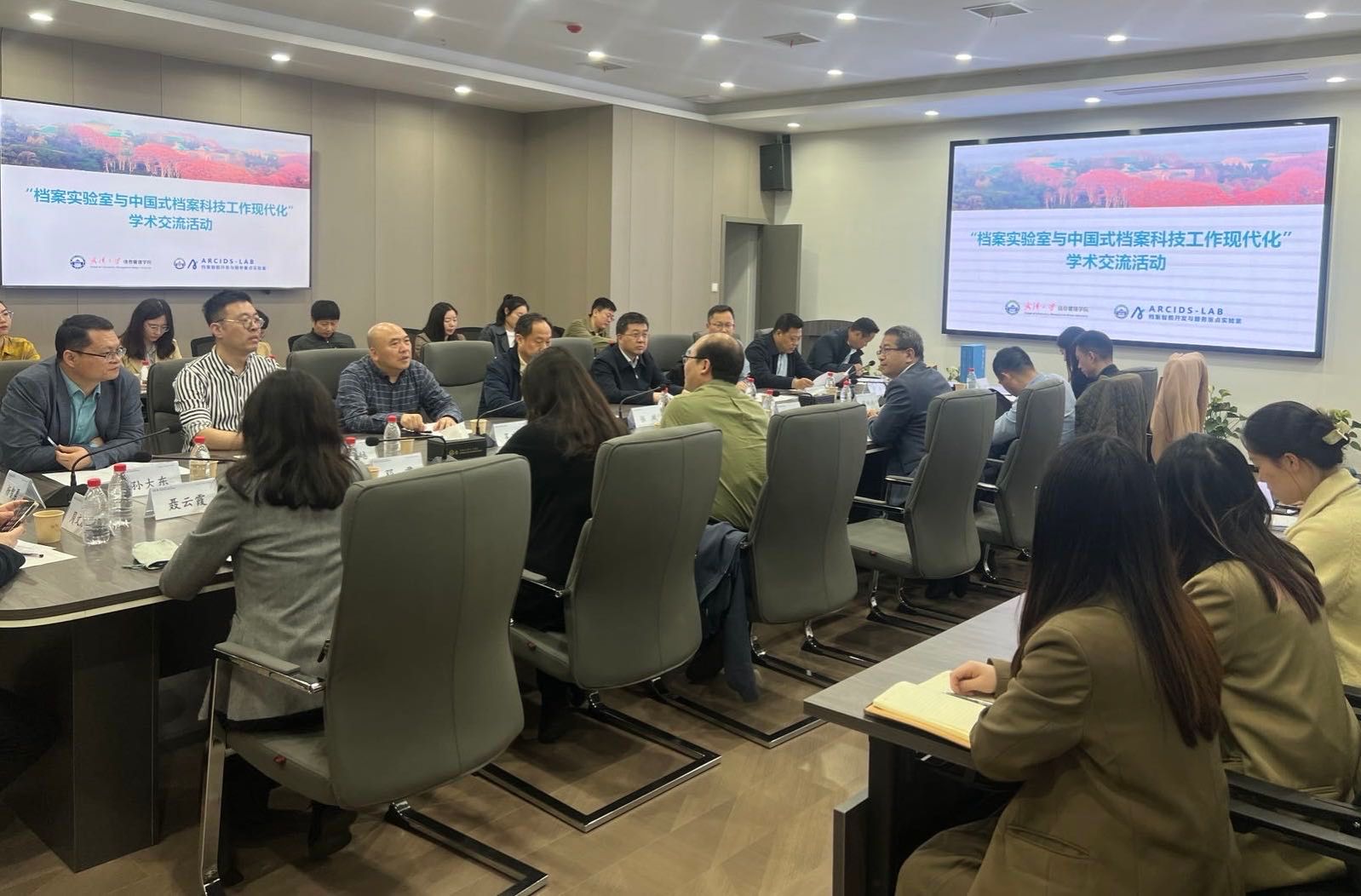
Ping Wang briefed the participating experts on the development of the Key Laboratory of Intelligent Development and Service of Archives, covering its background, co-construction mechanism, research directions and cases of achievement transfer. He also presented a number of archival information system platforms and technical tools already in use across the sector, and shared the problems the team encountered during research and development, the strategies adopted to address them, and future directions of development.
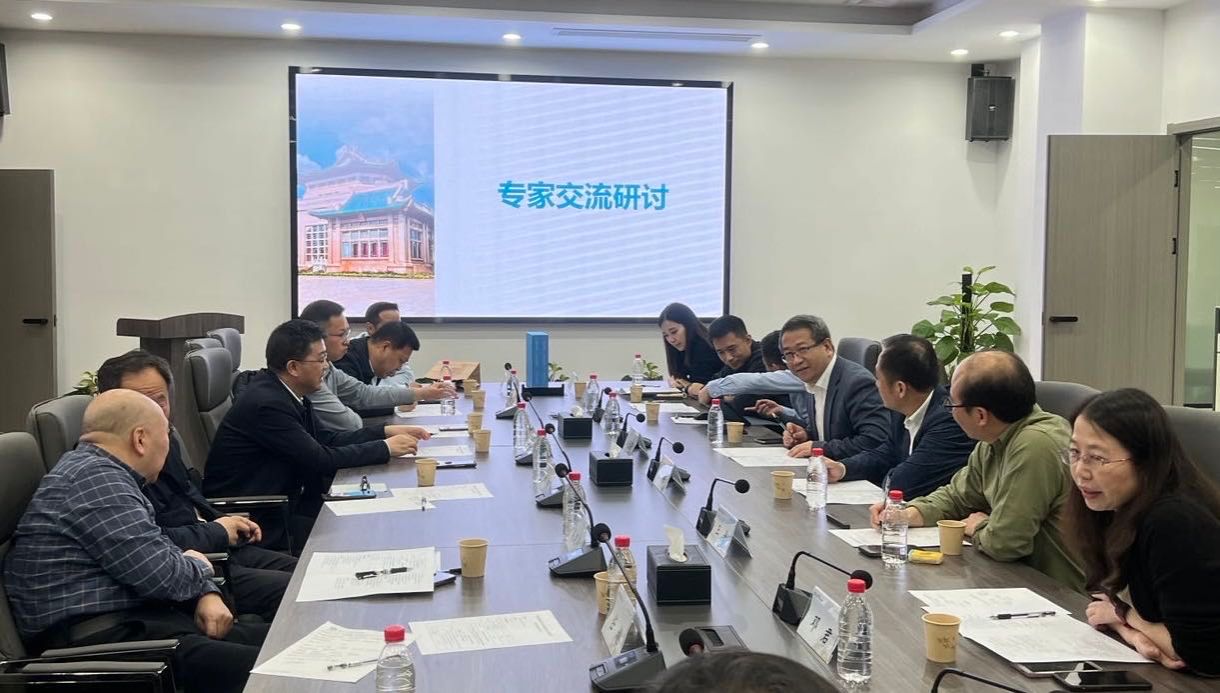
The experts and scholars held lively discussions on the development of the laboratory and on archival science and technology work. Starting from the current state of archives and other sectors, and drawing on the practical needs of archival work and historical experience in applying computer technology, they explored the application prospects of artificial intelligence and other emerging technologies in business scenarios such as archival declassification appraisal, archival compilation and research, and digitization. The experts spoke highly of the laboratory's achievements to date in intelligent archival technology development, smart management and services, and industry-university-research-application collaboration. They suggested that the laboratory step up publicity and promotion, further deepen and expand application scenarios, actively participate in formulating archival industry standards and rules, continue to pay attention to the ethical issues of applying emerging technologies, place greater emphasis on preserving the distinctive features of archival science and disseminating archival culture during the digital transformation of archives, commit to cultivating the data literacy of archival professionals, promote interdisciplinary integration and win-win cooperation among multiple institutions, and carry out more comprehensive and in-depth research on smart decision-making and smart services for the development of archival undertakings.
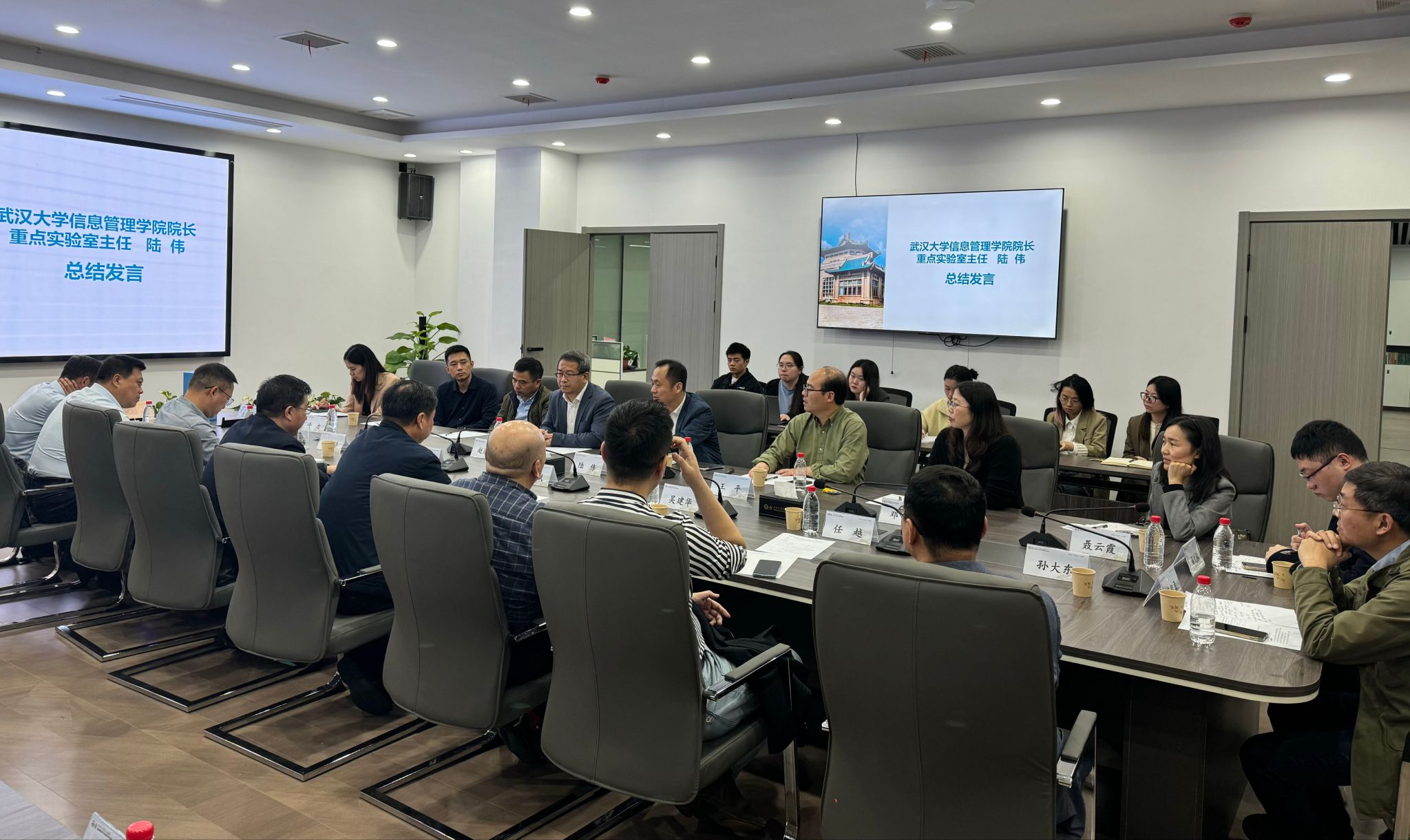
Wei Lu thanked the experts for their suggestions and comments. He stated that the School attaches great importance to the development of the archival science discipline, and that the laboratory will further expand its room for development and exchange, actively seek support from all parties, strive to build a high-level platform for comprehensive and open cooperation, and work to give full play to the laboratory's key supporting role in archival science and technology innovation.
This symposium was one of the series of events commemorating the 40th anniversary of the re-establishment of the archival science discipline at Wuhan University. It was jointly organized by the National Archives Administration Key Laboratory of Intelligent Development and Service of Archives, the Department of Archives and Government Information of the School of Information Management, and the editorial office of the journal "Archives & Construction". It aimed to strengthen professional cohesion among the archival science programs of peer universities, promote exchange and cooperation between archival academia and the profession, and offer advice and suggestions for archival science and technology innovation and the development of the archival science discipline. (Editor: Muyan Li)