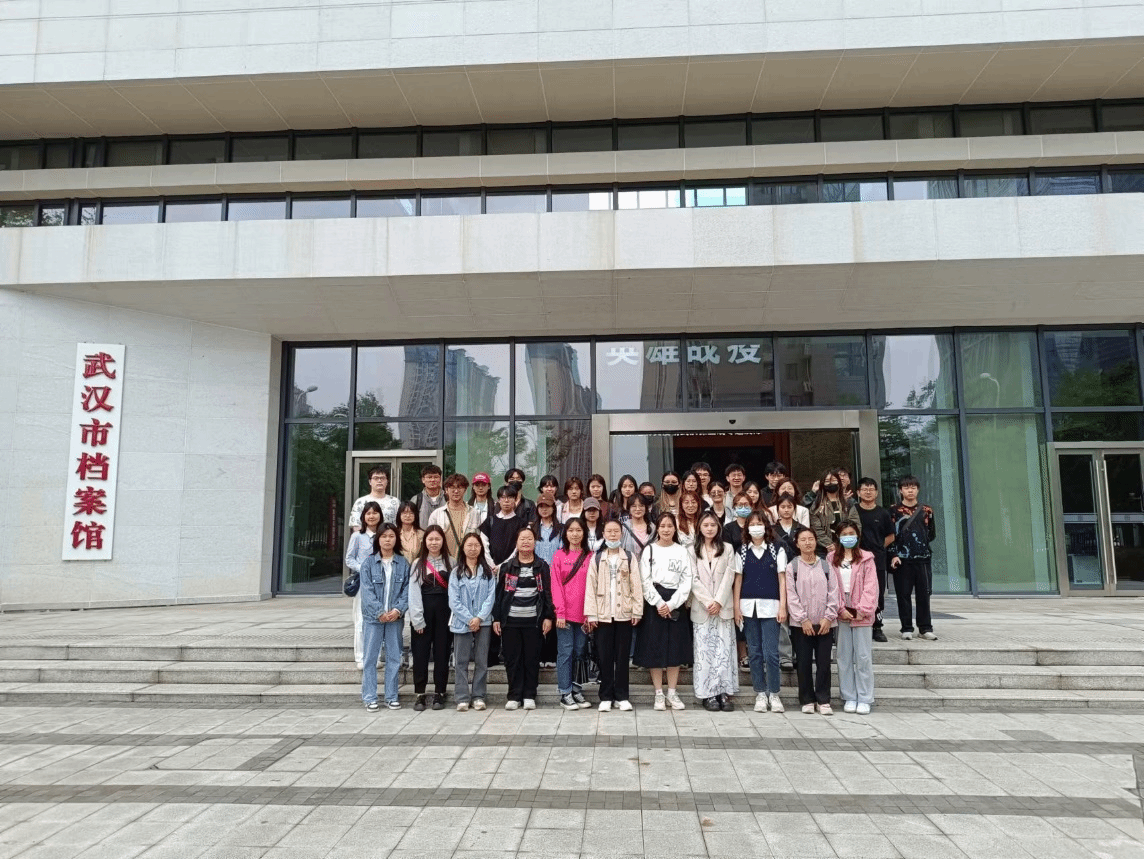
To gain a deeper understanding of the fundamental ideas and requirements of the strategic transformation toward archival informatization, help archival science students strengthen their professional awareness, and improve the quality of talent cultivation, on April 14, Ping Wang, Vice Dean of the School and Head of the Department of Archives and E-Government, led 34 archival science undergraduates of the Class of 2021 to the Wuhan Municipal Archives for a professional awareness practice activity.
The students first visited the Digitization Processing Center of the Wuhan Municipal Archives, where they learned about the entire workflow of converting precious historical archives into digital archives, including file retrieval, cataloging, scanning, processing, quality inspection, return, and backup. The students showed great interest in the digitization process, and some of them tried hands-on practice under the guidance of professional staff. The students remarked that although the digitization process is complex and tedious, the craftsmanship and professionalism of the staff were moving and admirable.
Next, the students visited the data center server room of the Wuhan Municipal Archives and its Smart Integrated Security Management and Control Platform. Through the visit, the students learned that against the backdrop of accelerating digital transformation, the Wuhan Municipal Archives has largely achieved deep integration of information technology and archival work, reaching a high level in the digital management of archives. Its Smart Integrated Security Management and Control Platform covers all aspects of the archives' management: it enables remote operation for managing, disinfecting, and dehumidifying archives in the repositories, and also supports effective management of the staff who administer the archives. Learning about this platform deepened the students' understanding of the Information Systems Analysis and Design course they are currently taking and provided inspiration for their ongoing information system design lab course.
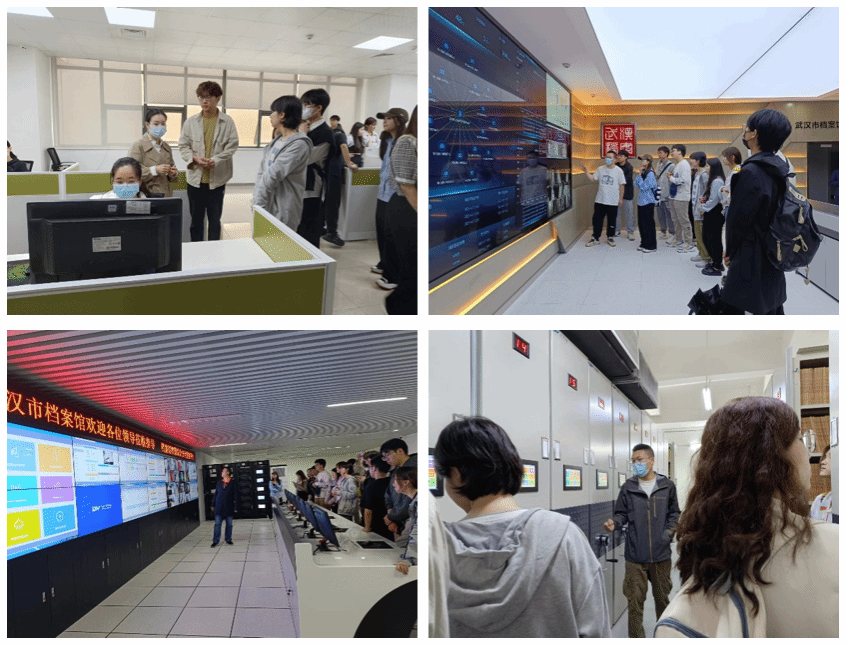
The students also visited the smart archival repository. Observing the intelligent repository updated their understanding of the hand-cranked shelving of traditional repositories and gave them a deep appreciation of the tremendous development opportunities that new technologies bring to the informatization of archives. The Wuhan Municipal Archives has made its repositories fully automated: the movement and locking of shelves, as well as the temperature and humidity of the repositories, can all be controlled through touch screens on the shelves. In the repository of Republic of China era archives, the students were captivated by the old records; the yellowed sheets of paper and the traditional Chinese characters faded by time set their imaginations running. They engaged in in-depth exchanges with the staff, raising long-held questions, and were reluctant to leave.
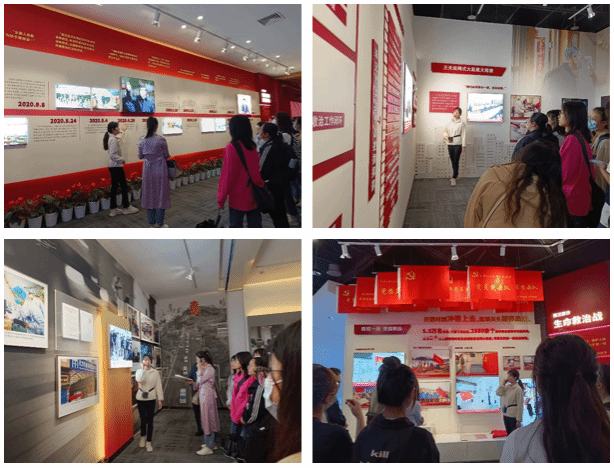
Guided by a docent, the students also visited the exhibition "Heroes Fighting the Epidemic- A Thematic Exhibition on the Battle to Defend Wuhan Against COVID-19". They listened to moving stories of heroes in the fight against the epidemic and saw archives in various forms: more than 380 photographs, more than 280 physical objects, and 29 multimedia installations. These archives profoundly embody the great spirit of fighting the epidemic, which puts life first, unites the whole nation, dares to sacrifice, respects science, and recognizes a shared future, and they vividly and truthfully recount how the Party and the state led the people of the whole country to a major and decisive victory in epidemic prevention and control.
At a hundred years, we are in our prime, and we will press on to write new chapters. In this professional awareness activity, the archival science undergraduates of the Class of 2021 stepped out of campus for hands-on practice. Through visits, learning, and exchanges, they deepened their understanding of archival informatization, keenly felt the enormous potential of the deep integration of information technology and archival work, gained a better understanding of the strengths of their discipline, and strengthened their professional confidence.