Recently, the team of Prof. Ping Wang, a researcher at the National Archives Administration Key Laboratory of Intelligent Development and Service of Archives and a professor at the School of Information Management, Wuhan University, published its latest research on ancient Chinese understanding in a leading international journal in information management, Information Processing & Management (IPM), in a paper titled "Confidence-based Syntax encoding network for better ancient Chinese understanding". IPM is a top journal in the field of information management. Shitou Zhang, a 2022 undergraduate graduate of Wuhan University, is the first author of the paper; Prof. Ping Wang is the corresponding author; and Wuhan University is the first affiliation of the paper.
Although neural network-based models continue to make rapid progress, syntax remains a fundamental element of natural language processing (NLP), especially in the context of Chinese language understanding. However, owing to the lack of high-quality syntactic annotations, research on understanding ancient Chinese by integrating syntactic information remains scarce. This paper uses "less-than-perfect" noisy syntax trees generated by unsupervised derivation and modern Chinese syntactic parsers to explore the untapped potential of syntax in enhancing ancient Chinese understanding. To this end, the paper proposes a novel syntax encoding component: the confidence-based syntax encoding network (cSEN). The component is designed to mitigate the side effects arising from the noise of unsupervised syntactic derivation and the incompatibility between ancient and modern Chinese.
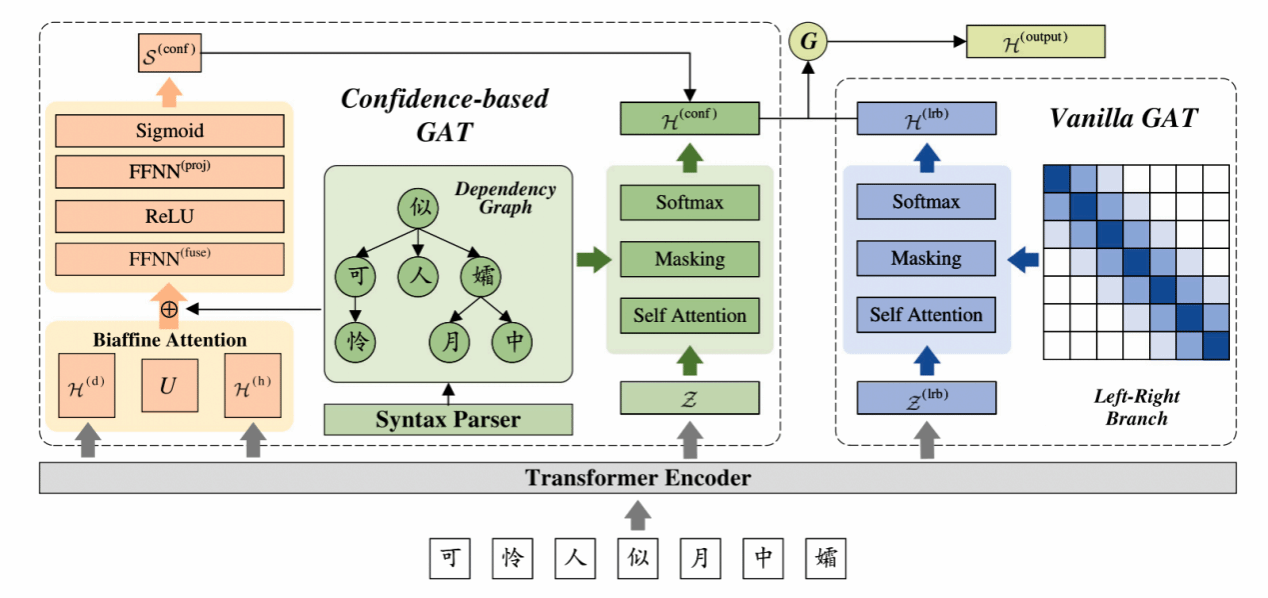
Figure 1. Architecture of the proposed cSEN
Experiments on two representative ancient Chinese understanding tasks, ancient poetry topic classification and ancient-to-modern Chinese translation, verified the effectiveness of the proposed cSEN, showing that the model consistently outperforms baseline methods in noisy scenarios. In addition, the paper constructs a new dataset for ancient Chinese poetry topic classification, providing a foundation for future research and addressing the current shortage of annotations in ancient Chinese corpora.
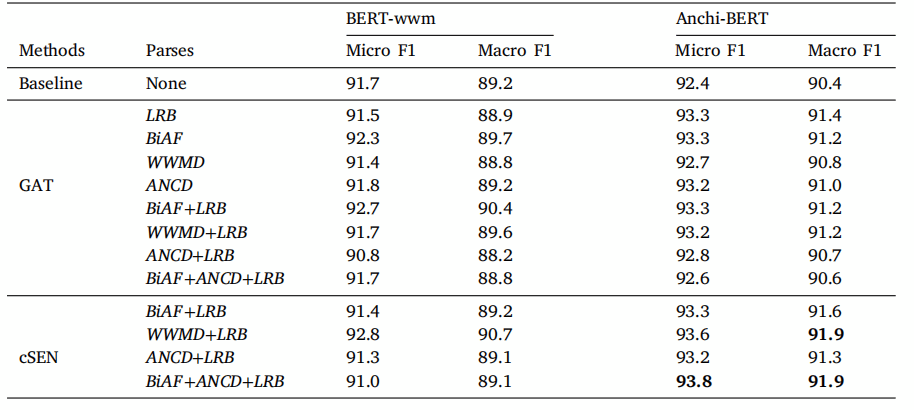
Figure 2. cSEN Comparison of results with the conventional graph encoding network GAT
The research was funded by the National Natural Science Foundation of China, the China Scholarship Council, and other programs.